Launch offer — valid today only

📄 Digital book in PDF · read it on your phone or print it

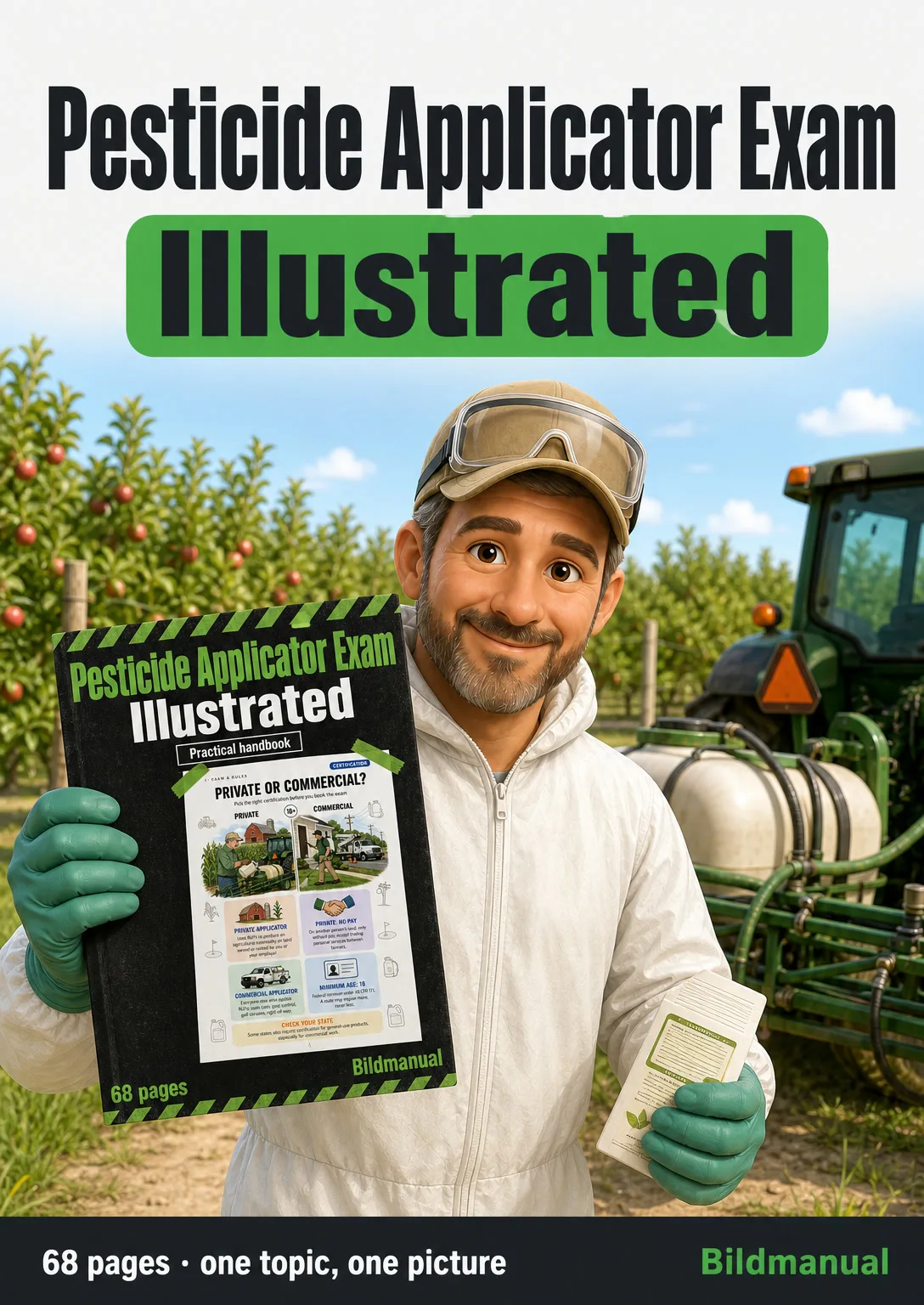
The Pesticide Applicator Core Exam in Drawings Read Any Label and Work the Tank Math, Always in the Same Order

The label, signal words, LD50, PPE, particle and vapor drift, temperature inversions, sprayer calibration, tank-mix math and storage. Every topic gets its own page: the drawing first, then what you need to remember. 68 illustrated pages.

START STUDYING THIS WAY

🔒 Secure checkout · PDF by email · 30-day guarantee

Every topic, its own pageEach label section, rule and formula drawn, with the explanation right beside it
68 illustrated pages9 parts, from private vs commercial certification to your state checklist
Up-to-date sourcesEPA rules 40 CFR Parts 156, 170 and 171
PDF by emailFormat

Look Inside the Book

Every page has one big drawing and a box with the numbers, rules and steps you need to know:

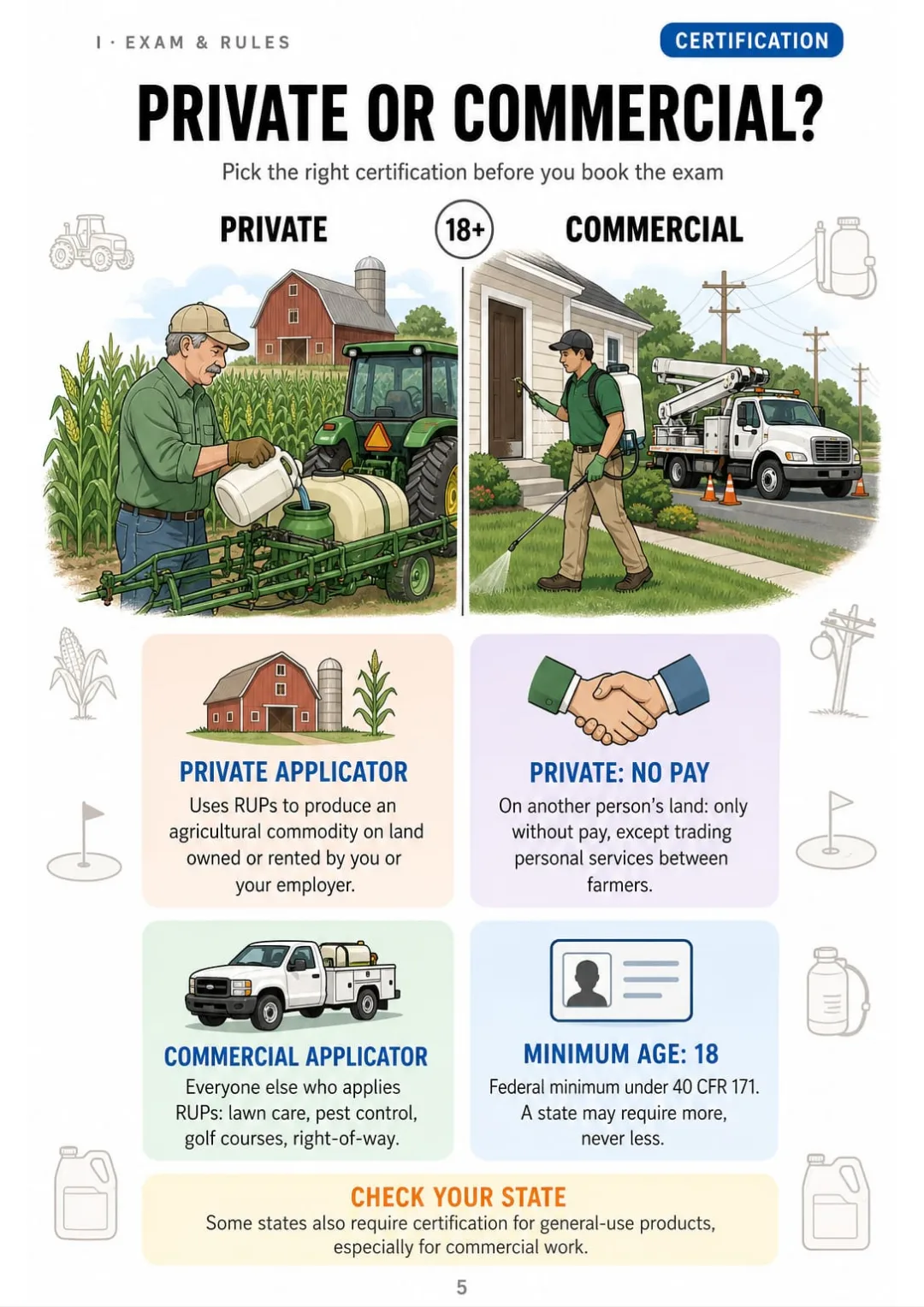
Private = farm RUPs on owned or rented land · Commercial = everyone else · Minimum age 18
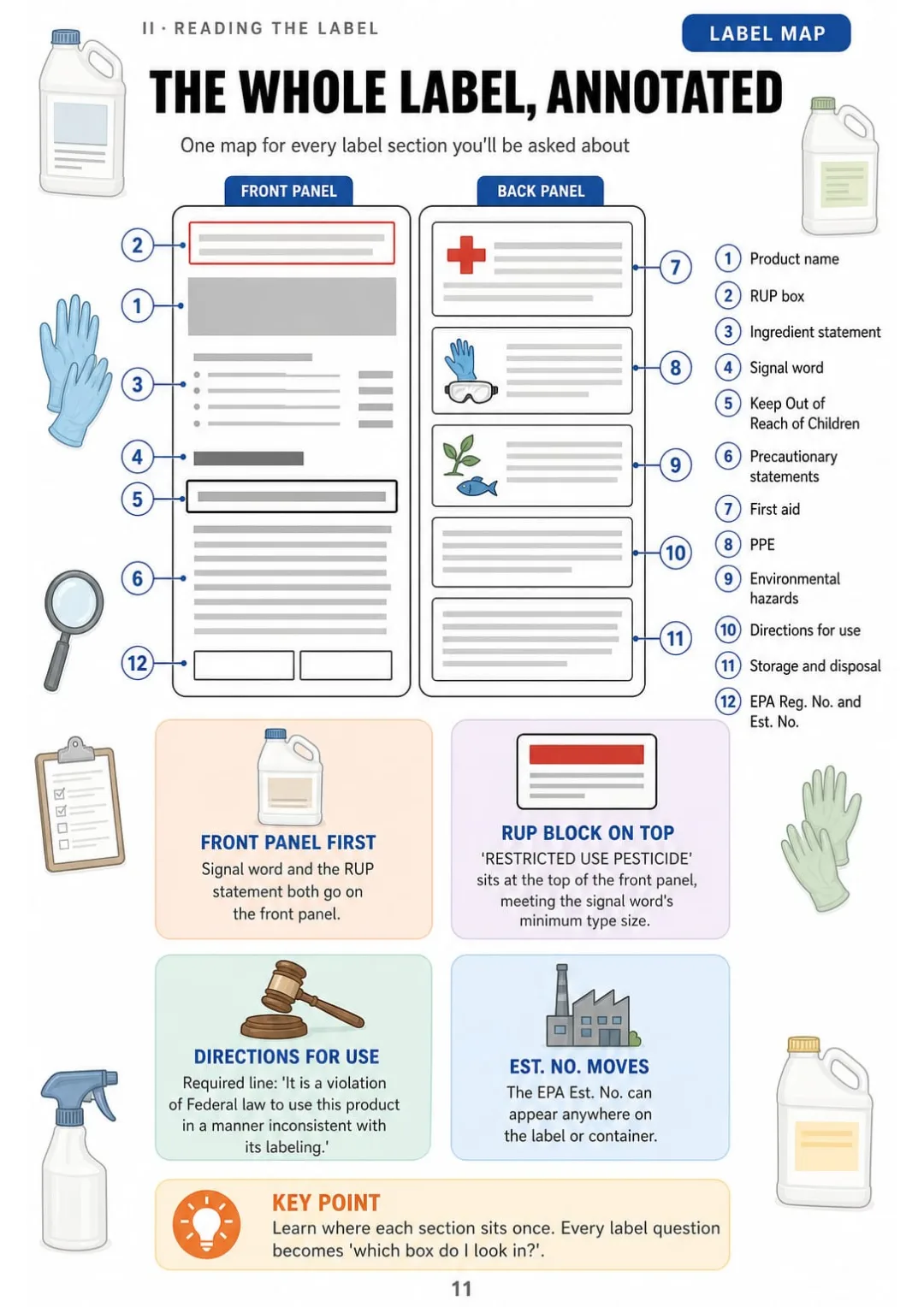
Sample label with 12 numbered callouts, from RUP box to EPA Reg. No.
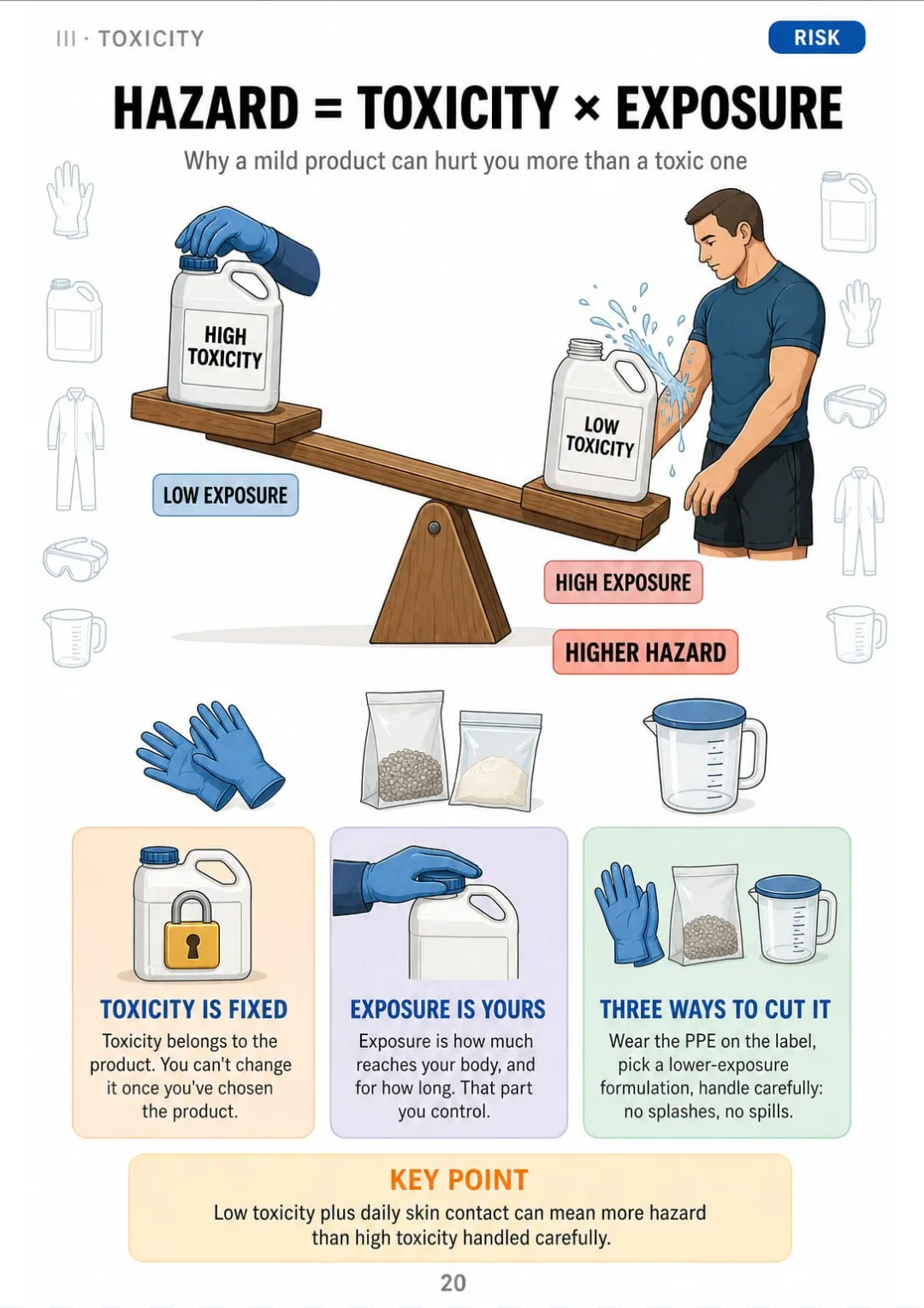
Hazard = toxicity × exposure: PPE, formulation and handling cut the part you control.
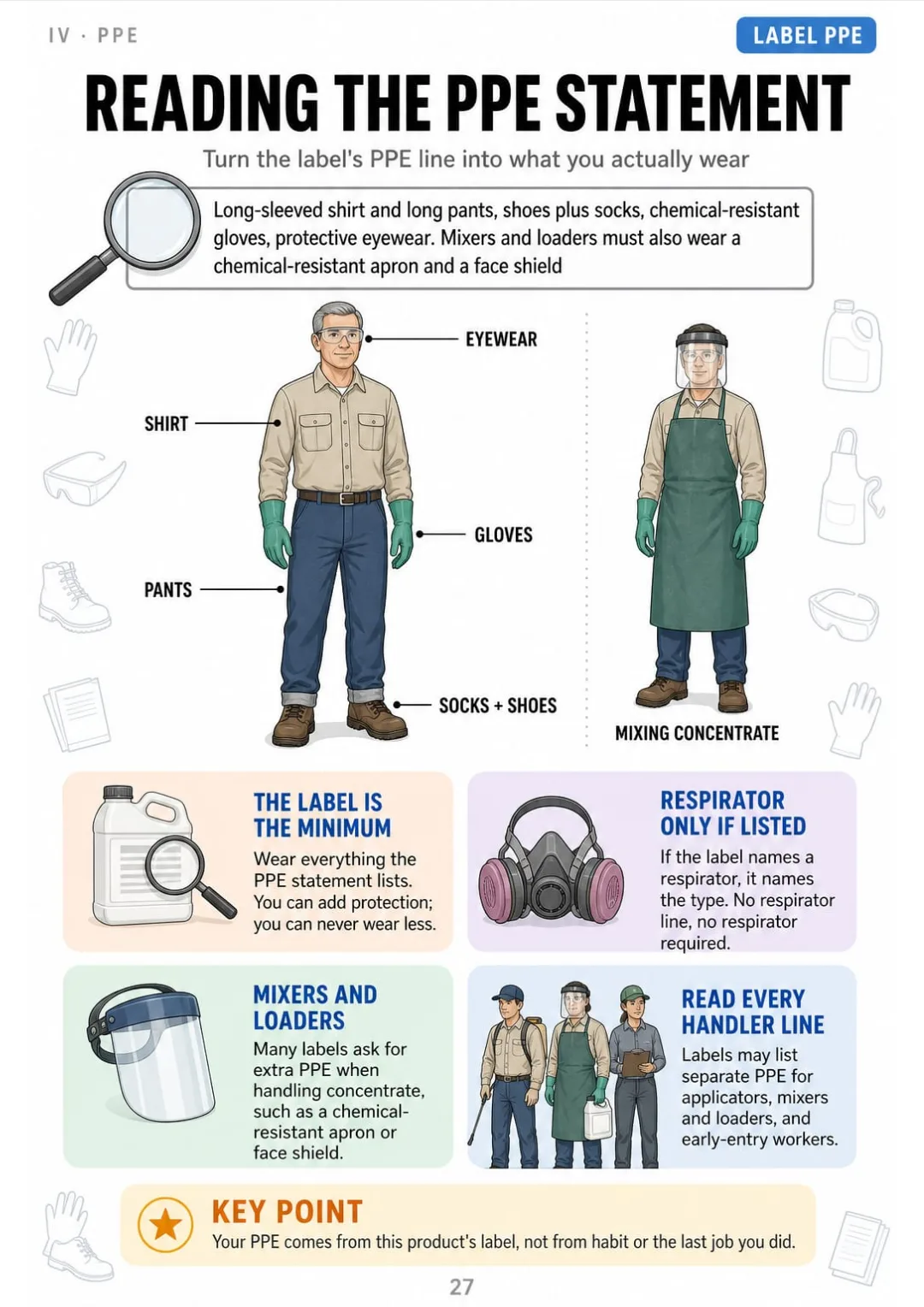
The label PPE statement is the minimum: shirt, pants, socks, shoes, gloves, eyewear, plus whatever it adds.
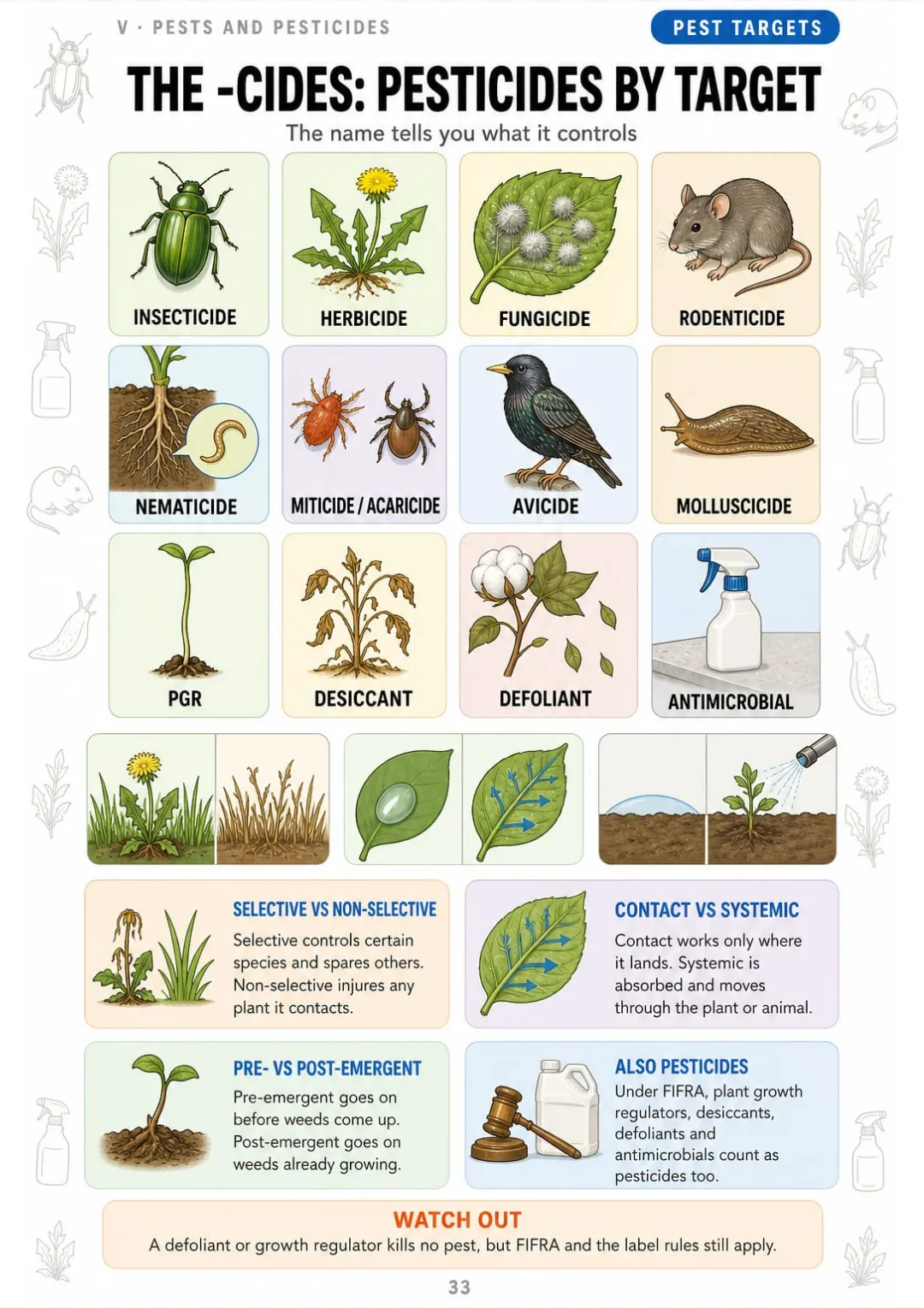
12 pesticide types by target + selective/non-selective, contact/systemic, pre/post-emergent
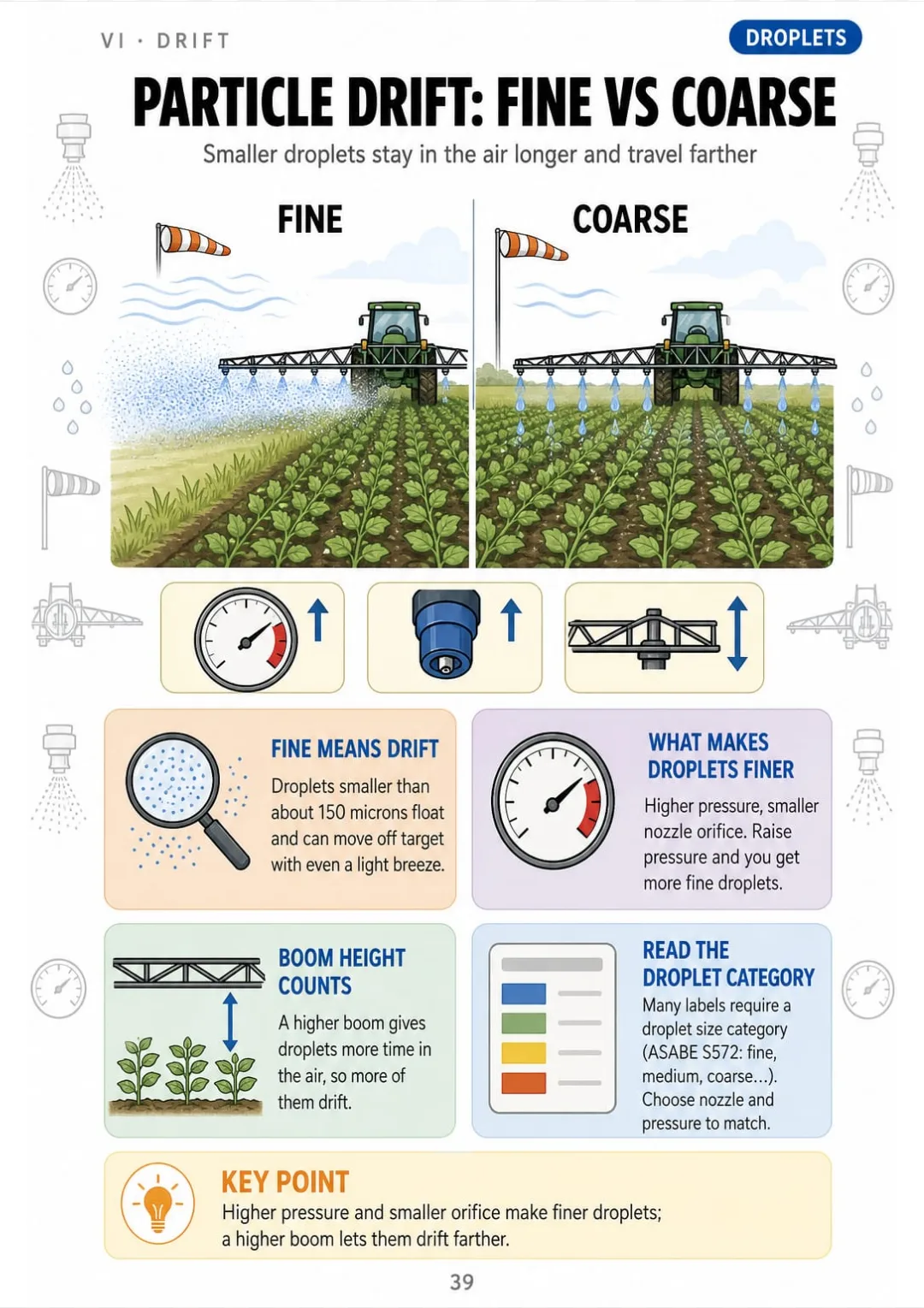
Fine droplets (under ~150 microns) drift; pressure and orifice set size, boom height adds drift.
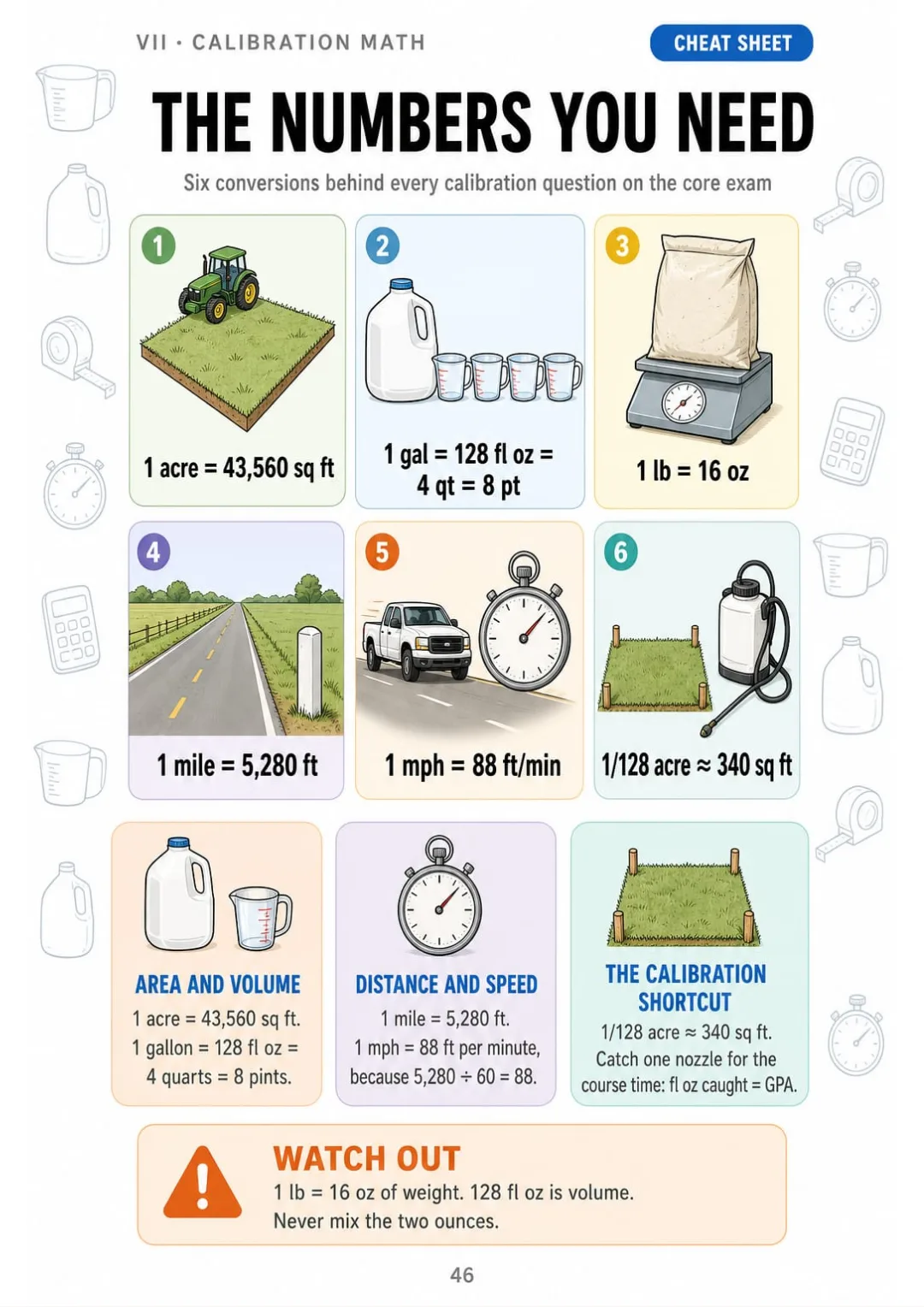
1 acre = 43,560 sq ft · 1 gal = 128 fl oz · 1 mph = 88 ft/min · 1/128 acre = 340 sq ft
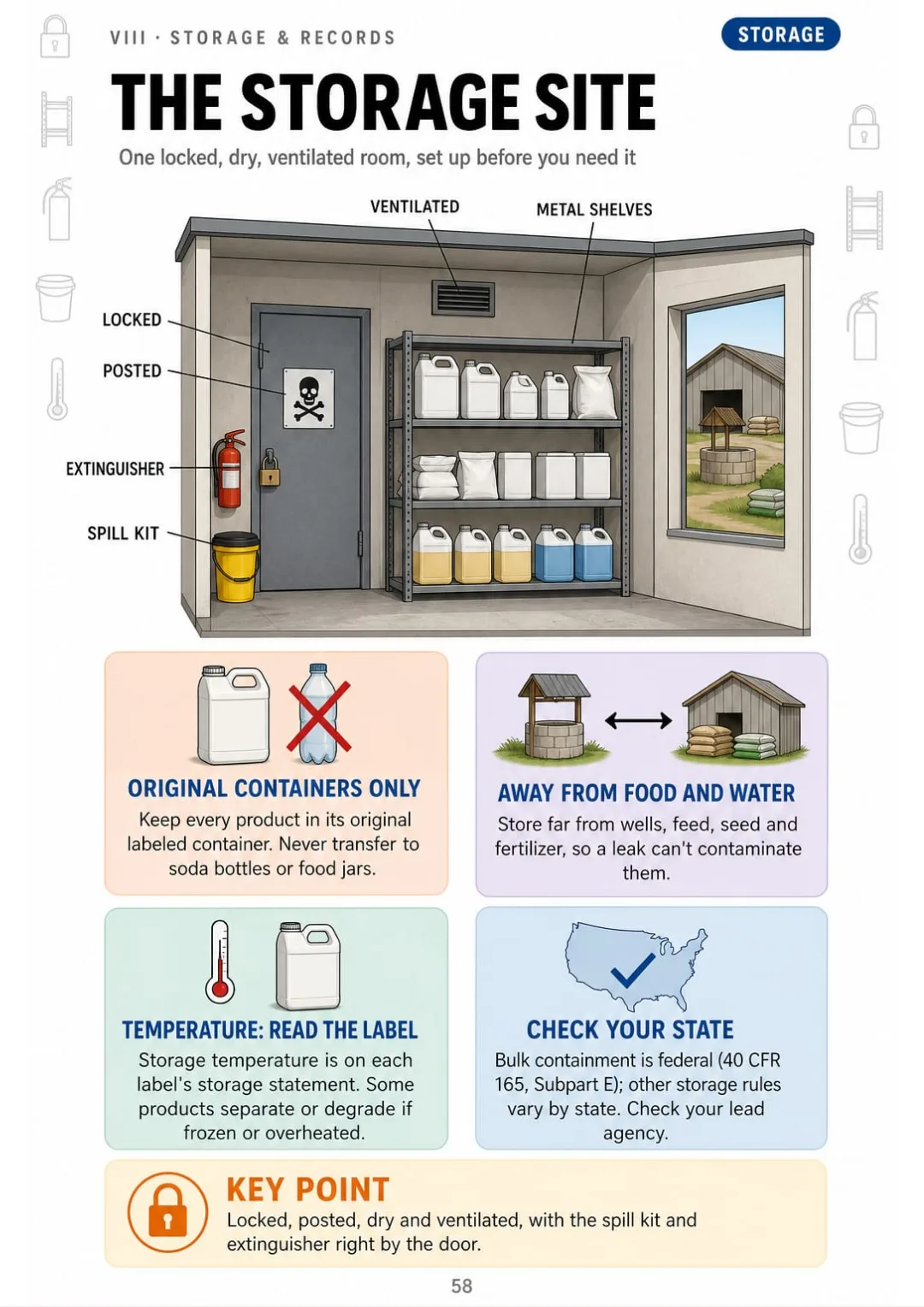
Locked, posted, ventilated, original containers, spill kit and extinguisher at the door.

Swipe to see more →

These are real pages from the book. The table of contents is the full one: 9 parts and 64 topics.

The Problem Isn't You. It's How It Was Explained to You.

You're at the mixing table with two jugs. One says DANGER, the other says CAUTION, and the practice question asks which job carries more hazard. You freeze.

The manual spreads the answer over three pages: toxicity, exposure, formulation, routes of entry. All words, nothing you can picture, so by the next chapter it's gone.

Hazard = toxicity × exposure: PPE, formulation and handling cut the part you control.

In this book that idea is one page, drawn as an equation: hazard = toxicity × exposure. Toxicity comes with the product. Exposure is the part you control, with PPE, the formulation you pick and how you handle it.

The same goes for the signal words, LD50, the four routes of exposure, particle drift and the 1/128-acre calibration. Each one has its own page.

You see it, you get it, and on the exam you work it out without flipping back to the manual.

COMPARE FOR YOURSELF

Same Topic, Two Ways to Study It

THIS
  • The manual: line after line of text
  • Label sections explained only in words
  • You walk into the exam with doubts
The pesticide label constitutes a legal document, and each component appearing thereon serves a specific regulatory function. The product label includes the brand name, the ingredient statement listing active and inert ingredients by percentage, the EPA registration number and establishment number, the signal word and associated precautionary statements, the statement of practical treatment, environmental hazards, physical and chemical hazards, the restricted use classification where applicable, the directions for use, the agricultural use requirements, and storage and disposal instructions, all of which must be read and understood prior to use.
FOR THIS
  • The whole label in one drawing
  • 12 numbered callouts, each in a box
  • You see it and you get it
Sample label with 12 numbered callouts, from RUP box to EPA Reg. No.
CONTENTS

Take a Look at the 9 Parts and 64 Topics

The exam and the rules, reading the label, toxicity, PPE, pests and pesticides, drift, calibration math, storage and records, and a final review with your state checklist: 68 pages, all illustrated.

IThe Exam and the Rules · pp. 5-10
  1. Private or Commercial: Which Certification You Need
  2. What Makes a Pesticide 'Restricted Use'
  3. The Core Exam and Your Category Exams
  4. FIFRA, EPA and Your State Lead Agency
  5. The Label Is the Law
  6. Recertification and Supervising Noncertified Applicators
IIReading the Label · pp. 11-19
  1. The Whole Label, Annotated
  2. Brand Name, Common Name, Chemical Name
  3. EPA Reg. No. vs EPA Est. No.
  4. Signal Word: DANGER, WARNING, CAUTION
  5. Precautionary Statements
  6. Mandatory vs Advisory Wording
  7. Directions for Use
  8. Agricultural Use Requirements Box: REI
  9. PHI: Days Before Harvest or Grazing
IIIToxicity and Your Body · pp. 20-26
  1. Hazard = Toxicity × Exposure
  2. LD50: The Lower the Number, the More Toxic
  3. Toxicity Categories in One Table
  4. Four Routes of Exposure
  5. Where Skin Absorbs the Most
  6. Acute, Delayed and Chronic Effects
  7. Signs of Poisoning and First Aid
IVPPE and Safe Handling · pp. 27-32
  1. Reading the PPE Statement
  2. Chemical-Resistant Gloves: Not Any Glove
  3. Respirators: Type, Fit, Filters
  4. Mixing and Loading: The Riskiest Minutes
  5. Cleaning PPE and Work Clothes
  6. Heat Stress Under PPE
VPests and Pesticides · pp. 33-38
  1. The -Cides: Pesticides by Target
  2. Formulations at a Glance
  3. Mixing Order and the Jar Test
  4. Adjuvants: What They Do
  5. IPM in Five Steps
  6. Resistance and Mode-of-Action Groups
VIDrift and the Environment · pp. 39-45
  1. Particle Drift: Fine vs Coarse Droplets
  2. Wind: Too Much and Too Little
  3. Temperature Inversion
  4. Vapor Drift vs Particle Drift
  5. Buffer Zones and Sensitive Areas
  6. Groundwater and Runoff
  7. Bees, Wildlife and Endangered Species
VIIEquipment and Calibration Math · pp. 46-57
  1. The Numbers You Need on One Page
  2. Area of a Field: Rectangle, Triangle, Circle
  3. Sprayer Parts and What Each Changes
  4. Nozzles: Type, Size, Wear
  5. Checking Your Ground Speed
  6. Boom Calibration: The 1/128-Acre Method
  7. Hand and Backpack Sprayer Calibration
  8. The GPA Formula
  9. How Much Product in the Tank
  10. Liquid Products: Pounds of Active Ingredient per Gallon
  11. Dry Products and Percent Active Ingredient
  12. Granular Spreader Calibration
VIIIStorage, Spills, Disposal and Records · pp. 58-63
  1. The Storage Site
  2. Spills: Control, Contain, Clean Up
  3. Triple Rinsing a Container
  4. Leftover Mix, Rinsate and Unwanted Product
  5. Transporting Pesticides
  6. Restricted Use Records
IXReview and Your State Checklist · pp. 64-68
  1. The Most Frequent Mix-Ups
  2. Label Questions: Where to Look
  3. Calibration Math in One Order
  4. Your State Checklist, Part 1: The Exam
  5. Your State Checklist, Part 2: After You Pass

One Page, One Topic, All Clear

Think of it this way:

You're on the core exam and a question gives you a 20-acre field, a sprayer that puts out 15 gallons per acre, a 300-gallon tank and a label rate of 1 quart per acre. You need the product per tank, and you need it now.

In the book you open the page for that math and see it drawn: the tank, the acres it covers, the label rate and the same steps in the same order, with one example worked out.

12 pesticide types by target + selective/non-selective, contact/systemic, pre/post-emergent

Same with the signal words, LD50, the PPE statement, temperature inversions and triple rinsing: each one on its own page.

Pesticide Applicator Exam Illustrated is 9 parts and 64 topics, all drawn, and at the end a review of the most frequent mix-ups and your state checklist.

What you see drawn, you don't have to memorize.

What's Inside Pesticide Applicator Exam Illustrated:

Ipp. 5-10

The Exam and the Rules

Private vs commercial certification, what makes a pesticide restricted use, the core and category exams, FIFRA and your state lead agency, the label as law, recertification

IIpp. 11-19

Reading the Label

The whole label annotated, brand vs common vs chemical name, EPA Reg. No. vs Est. No., signal words, precautionary statements, mandatory vs advisory wording, REI and PHI

IIIpp. 20-26

Toxicity and Your Body

Hazard = toxicity × exposure, LD50 read the right way, toxicity categories in one table, the four routes of exposure, acute vs chronic effects, signs of poisoning and first aid

IVpp. 27-32

PPE and Safe Handling

The PPE statement, chemical-resistant gloves, respirators, mixing and loading, cleaning PPE and work clothes, heat stress

Vpp. 33-38

Pests and Pesticides

The -cides by target, formulations, mixing order and the jar test, adjuvants, IPM in five steps, resistance and mode-of-action groups

VIpp. 39-45

Drift and the Environment

Fine vs coarse droplets, wind, temperature inversions, vapor vs particle drift, buffer zones, groundwater and runoff, bees and endangered species

VIIpp. 46-57

Equipment and Calibration Math

The numbers you need, field area, sprayer parts, nozzles, ground speed, the 1/128-acre method, backpack calibration, GPA, product per tank, percent active ingredient, granular spreaders

VIIIpp. 58-63

Storage, Spills, Disposal and Records

The storage site, spills step by step, triple rinsing, leftover mix and rinsate, transport, restricted use records

IXpp. 64-68

Review and Your State Checklist

The most frequent mix-ups, where to look on the label, calibration math in one order, and a 2-page checklist you fill in with your own state's rules and exam details

At the end of the book: A review of the most frequent mix-ups, the calibration math in one order and a 2-page checklist you fill in with your own state's rules.
Plus: 2 Free Books

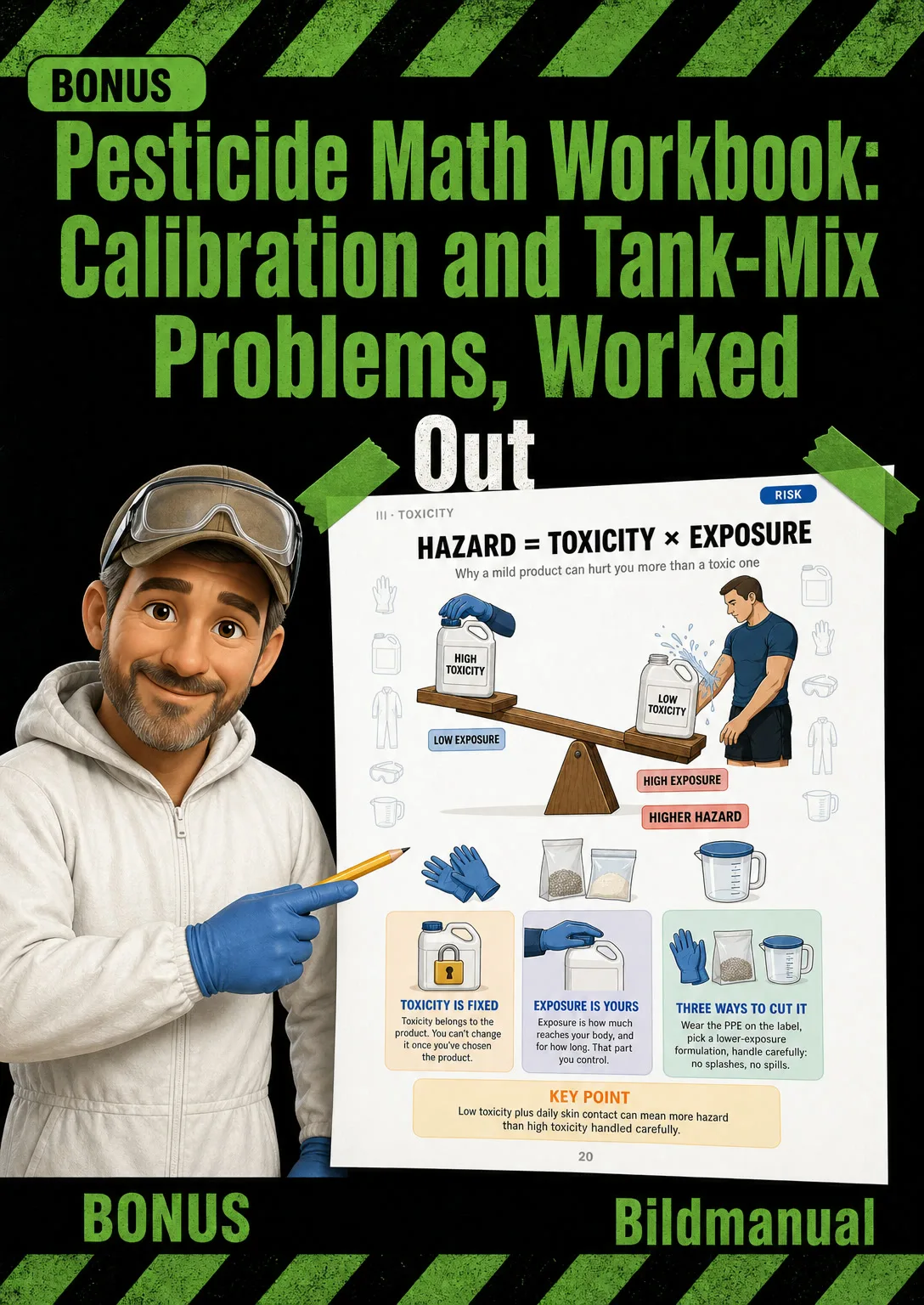
Pesticide Math Workbook: Calibration and Tank-Mix Problems, Worked Out

BONUS 1: «Pesticide Math Workbook: Calibration and Tank-Mix Problems, Worked Out»

Value on its own: US$ 17.90

Practice the math the core exam asks for (acres, gallons per acre, product per tank, percent active ingredient) with every answer solved step by step, so the numbers stop freezing you.

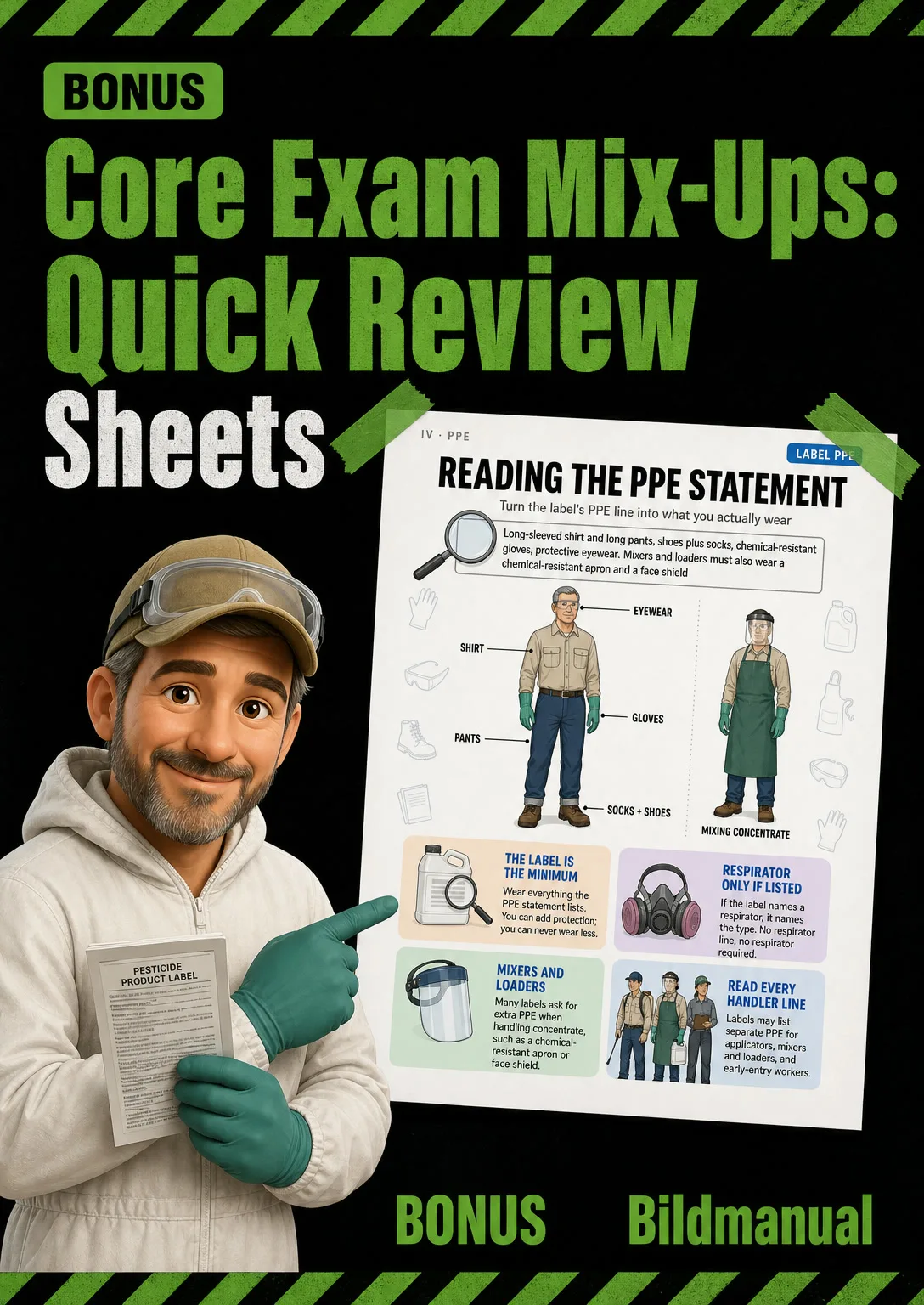
Core Exam Mix-Ups: Quick Review Sheets

BONUS 2: «Core Exam Mix-Ups: Quick Review Sheets»

Value on its own: US$ 14.90

The most frequent mix-ups on one sheet each (REI vs PHI, LD50 read backwards, mandatory vs advisory label language, particle vs vapor drift) so you can review them in a few minutes before the test.

Pesticide Applicator Exam Illustrated with 2 Free Books

  • Pesticide Applicator Exam Illustrated: 68 illustrated pagesUS$ 63
  • BONUS 1: Pesticide Math Workbook: Calibration and Tank-Mix Problems, Worked OutUS$ 17.90
  • BONUS 2: Core Exam Mix-Ups: Quick Review SheetsUS$ 14.90
  • High-resolution PDF to printIncluded
Total value US$ 95.80
YOUR PRICE:
US$ 27
You save US$ 68.80
YES, I WANT PESTICIDE APPLICATOR EXAM ILLUSTRATED FOR US$ 27

📄 This is a digital PDF book sent to your email: nothing is printed or shipped.

Secure purchaseEncrypted payment30-day guarantee

PDF by email: We email you Pesticide Applicator Exam Illustrated as a PDF, together with the two free books. It's a single payment: no installments, no extra charges.

Who This Book Is For

You're studying for your first certification

You're studying for your first certification

Private or commercial, the core topics are the base of your exam: the label, toxicity, drift and the math, one page at a time, in the same order every time. If your state gives private applicators their own exam, these are still the topics it covers.

Your exam date is coming up

Your exam date is coming up

You review by drawing, not by rereading chapters. The mix-ups page and the calibration math in one order are there for the last few days.

You're already certified and renewing

You're already certified and renewing

If you're recertifying by exam, you refresh LD50, drift and calibration without going back through the whole manual. Print it and keep it in the truck.

Everything You Get Today

US$ 95.80US$ 27
YES, I WANT PESTICIDE APPLICATOR EXAM ILLUSTRATED FOR US$ 27

📄 This is a digital PDF book sent to your email: nothing is printed or shipped.

30DAYS
GUARANTEE

30-Day Guarantee

Try Pesticide Applicator Exam Illustrated for 30 days, bonus books included.

We refund everything if the file won't open, if the book isn't what you see here, if you were charged twice or if the email doesn't arrive. Just email us.

You pay once. No subscriptions.

Frequently Asked Questions

Is it for me if I haven't taken a written exam in 20 or 30 years?

Yes. Every topic is drawn on its own page, and the math starts from the basics with one worked example per page. It covers the core exam; your state's category exams and laws come from your state.

Where does the content come from?

From the federal EPA rules: 40 CFR Part 171 (core competencies), Part 156 (labeling and signal words), Part 170 (Worker Protection Standard) and Part 165 (container rinsing), cross-checked against the National Pesticide Applicator Certification Core Manual. Rules that can differ by state carry a "check your state" note.

Is this official material?

No. It's an independent illustrated study book. It isn't published or endorsed by EPA or by any state agency. It doesn't give you a license or a certificate, and it doesn't count as recertification credits (CEUs): it's for studying for the exam you take with your state.

Does it replace my state's manual or training?

No. Use it alongside the manual your state assigns. It doesn't replace the product label, your training or medical care: in an emergency, call 911 or Poison Control.

Are the practice questions the ones on the exam?

No. They're written for this book to help you practice. They aren't official questions from any exam.

How do I get it?

The book and the 2 bonus books come as PDFs by email.

Do I have to pay every month?

No. It's a one-time payment.

Can I have it on paper?

Yes. It's a printable PDF: print the whole book or just the pages you want to keep at hand.

How does the refund work?

You have 30 days. We refund everything if the file won't open, if the book isn't what you see on this page, if you were charged twice or if the email doesn't arrive: just email us.

Before You Close This Page

No more rereading the manual with nothing sticking.

Signal words, LD50 and drift: you see them drawn and you've got them.

You walk into the core exam knowing where everything is.

Drawings make studying faster.

The book is right below.

One-time payment: US$ 27 · Guarantee: 30 days · PDF by email

YES, I WANT PESTICIDE APPLICATOR EXAM ILLUSTRATED FOR US$ 27

📄 This is a digital PDF book sent to your email: nothing is printed or shipped.